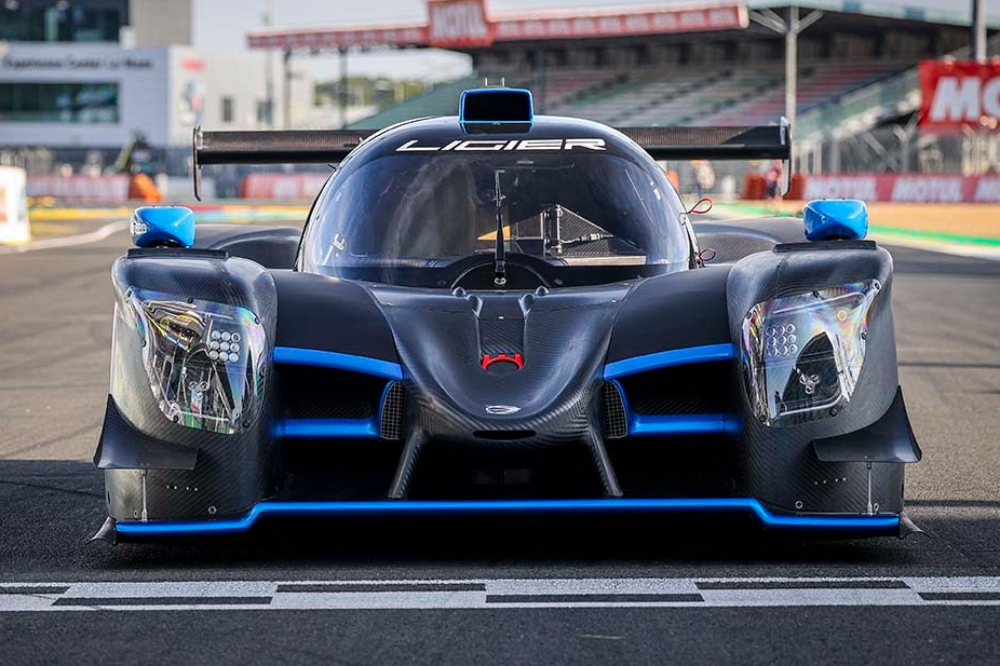
Developed specifically for endurance racing and prototype customer teams, the JS P325 was redesigned around the new twin-turbocharged Toyota V6 engine introduced for all LMP3 manufacturers from 2025 onward. The platform is eligible for championships such as the European Le Mans Series, Michelin Le Mans Cup and Road to Le Mans.
Chassis & constructions
— Carbon fibre monocoque chassis manufactured by HP Composites
— Carbon fibre bodywork optimized for 2025 LMP3 aerodynamic regulations
— Zylon side-impact protection panels
— FIA and ACO 2025 safety compliant cockpit structure
— Driver cooling and cockpit ventilation system
Dimensions & Weight
— Length: 4,605 mm
— Width: 1,900 mm
— Wheelbase: 2,860 mm
— FIA/ACO regulated minimum weight approximately 1,000 kg for 2025-spec LMP3 cars
Engine & Powertrain
— Engine: Toyota V35A-FTS 3.5-litre twin-turbocharged V6
— Configuration: 60° V6 bi-turbo
— Power output: approximately 470 hp
— Transmission: Xtrac 1152 six-speed sequential gearbox
— Paddle-shift pneumatic gear change system by Megaline
— Rear-wheel drive
— Magneti Marelli engine and gearbox electronics
Suspension, Steering & Brakes
— Front suspension: Double wishbone with pushrod-actuated dampers
— Rear suspension: Double wishbone with pushrod-actuated dampers
— Öhlins TTX40 four-way adjustable dampers
— Adjustable anti-roll bars front and rear
— Hydraulic power steering
— Brembo six-piston brake calipers
— 14-inch brake discs front and rear
Wheels, Tyres & Miscellaneous
— Wheels: 18-inch OZ Racing magnesium wheels
— Front wheel width: 12.5 inches
— Rear wheel width: 13 inches
— Central locking racing wheel system
— Enhanced cooling package compared to previous JS P320 generation
Predecessors and competitors
The Ligier JS P325 succeeds the Ligier JS P320, which became one of the most successful LMP3 platforms globally between 2020 and 2024. The new P325 was developed primarily to accommodate the new twin-turbo V6 powertrain and revised cooling requirements introduced under the third-generation LMP3 regulations.
Within the LMP3 category, the JS P325 competes against other homologated 2025-generation prototypes from manufacturers including Duqueine, Ginetta and ADESS in championships sanctioned by the ACO and IMSA.
Maintenance schedules depend heavily on endurance race mileage, testing frequency and operating conditions. Typical professional team maintenance procedures include:
— Frequent inspection of turbochargers and cooling systems due to increased thermal loads from the twin-turbo V6
— Sequential gearbox servicing based on operating hours and endurance mileage
— Brake and suspension rebuild schedules adjusted according to circuit characteristics
— Regular inspection of carbon bodywork, underfloor and aerodynamic components after endurance events
Teams operating former JS P320 platforms may also convert eligible chassis to JS P325 specification using approved upgrade kits supplied by Ligier Automotive.
What championships is the Ligier JS P325 eligible for?
The JS P325 is eligible for 2025-generation LMP3 championships including the European Le Mans Series, Michelin Le Mans Cup and Road to Le Mans under ACO regulations.
How much power does the Ligier JS P325 produce?
The car uses a twin-turbocharged 3.5-litre Toyota V6 engine producing approximately 470 horsepower under LMP3 regulations.
What gearbox does the Ligier JS P325 use?
The prototype is equipped with a six-speed Xtrac sequential gearbox combined with a pneumatic paddle-shift system.
Is the Ligier JS P325 an evolution of the JS P320?
Yes. Under the 2025 LMP3 regulations, manufacturers were permitted to modify the engine installation, cooling systems and surrounding areas while retaining the core chassis architecture from the previous generation.
Can existing JS P320 cars be upgraded?
Yes. Ligier Automotive offers upgrade kits allowing eligible JS P320 chassis to be converted into JS P325 specification.
Competition & Use Cases
The Ligier JS P325 is designed for professional endurance racing teams, gentleman drivers and driver development programs competing in prototype racing. The platform is commonly used in endurance championships featuring multi-class racing formats and serves as one of the primary entry categories into modern Le Mans prototype competition.
Ligier prototypes have historically been among the most successful cars in LMP3 racing, with strong customer adoption thanks to competitive operating costs, extensive support infrastructure and proven endurance reliability.
All specifications, dimensions, power figures and championship eligibility details are provided for informational purposes based on publicly available manufacturer and ACO/FIA data. Actual vehicle configuration, homologation status and technical setup may vary depending on series regulations, upgrades and team specifications. Always confirm official details with Ligier Automotive and championship organisers before purchase or competition use.
